Steering Actuation & Control
Navigation
Send Us A Message
When does a steering angle sensor need calibration after alignment?
Author
Date Published
Reading Time
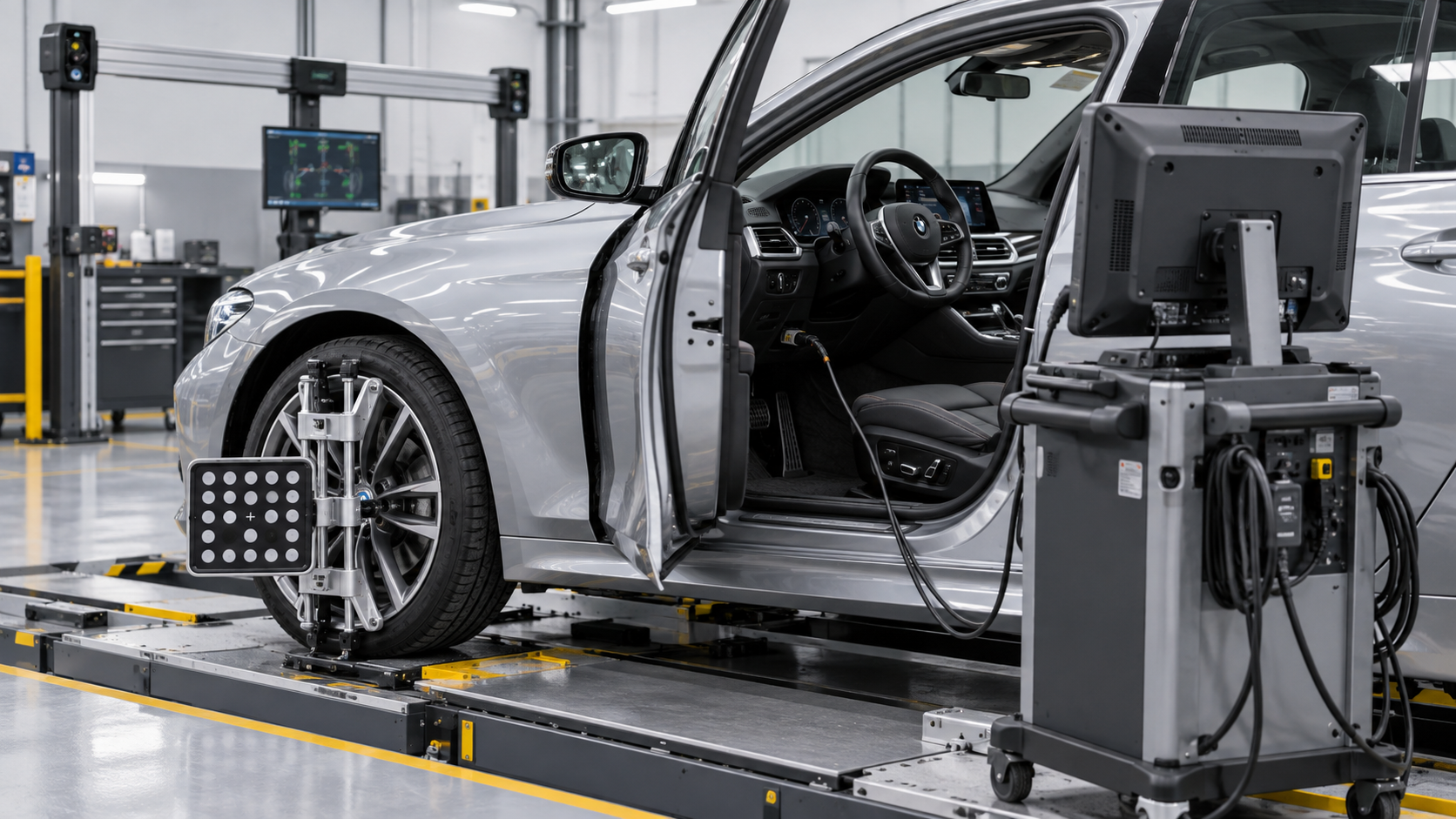
A steering angle sensor needs calibration after wheel alignment when the vehicle manufacturer specifies it, when the repair changes the relationship between the steering position and the stored straight-ahead reference, or when diagnostic checks identify a required initialization. It is not automatically necessary on every vehicle, but the absence of a warning light does not prove that calibration can be skipped.
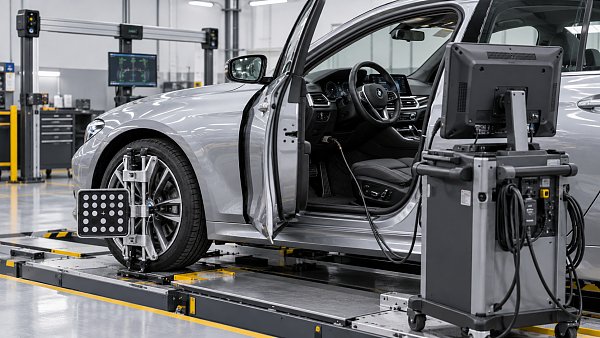
The essential distinction is between correcting wheel geometry and teaching the electronic system its reference position. Alignment establishes the mechanical relationship between the wheels and vehicle. Steering-angle calibration establishes or validates an electronic reference. Neither operation can substitute for the other, and calibration must not be used to hide an off-center steering wheel or unresolved alignment fault.
When calibration belongs in the alignment job
The controlling source is the current service information for the exact vehicle, including model year, steering configuration, and installed equipment. An alignment machine’s reset prompt is useful, but it is not a substitute for the manufacturer’s procedure. Requirements can differ between vehicles that appear mechanically similar.
A toe adjustment does not necessarily alter a sensor’s physical mounting. However, changing the relationship between steering-wheel position and road-wheel direction can make the stored reference inappropriate. Rear alignment also matters: a thrust-angle change can affect the steering position needed to travel straight. Checking only the front toe readings can therefore miss the reason for a post-alignment discrepancy.
Why a straight steering wheel is not enough
Steering angle sensors provide an input used by systems such as electronic stability control, electric power steering, and some driver-assistance functions. Depending on the architecture, the signal may come from a steering-column sensor, a sensor integrated into another assembly, or a steering-system position measurement interpreted by control software.
The control system compares steering input with other information, including wheel speeds and vehicle motion. If its learned straight-ahead reference is wrong, the reported steering input may not agree with the vehicle’s actual path. That disagreement can generate a fault or affect functions that depend on a valid steering-angle signal.
Three positions must not be confused: a visually centered steering wheel, a mechanically correct straight-ahead steering position, and the electronic zero or reference position. They should agree within the vehicle’s specified limits, but one does not establish the others. A steering wheel can look level while the rack is incorrectly centered or the vehicle is compensating for a rear thrust-angle problem.
Likewise, a scan tool displaying zero degrees does not prove that the alignment is correct. It may simply indicate that the system has accepted the current position as its reference.
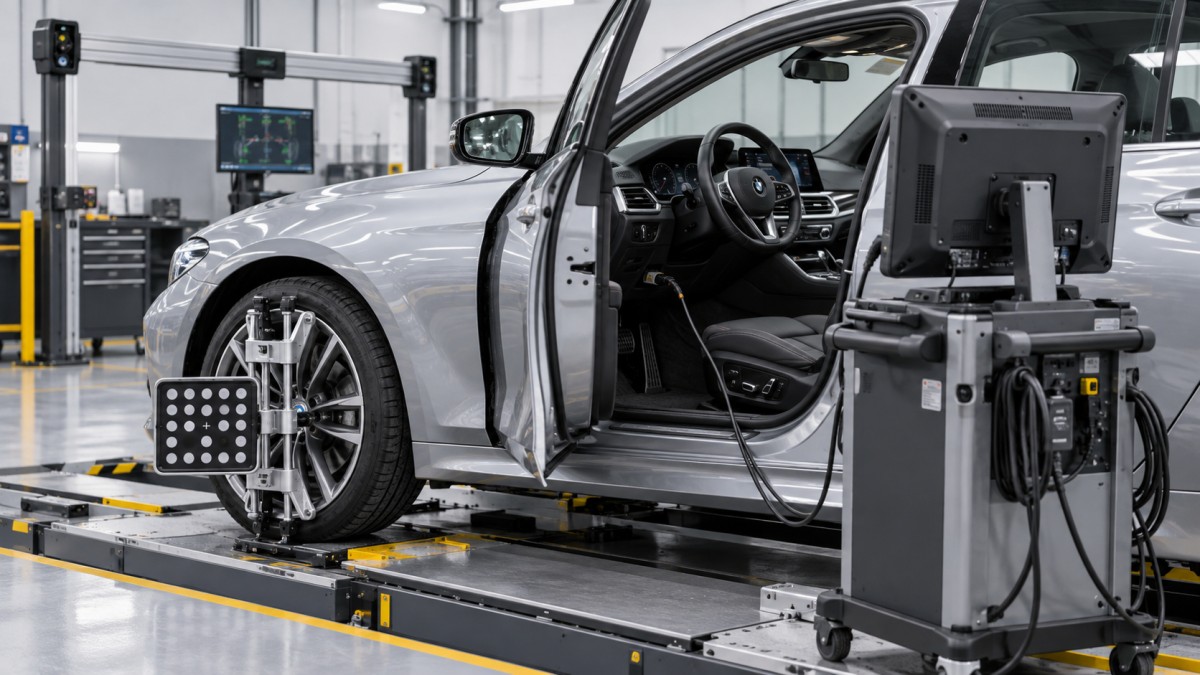
Check the mechanical condition before resetting anything
Before calibration, confirm that the alignment is genuinely complete. Tire pressures, tire condition, specified ride-height or loading conditions, and steering and suspension integrity all affect whether the vehicle has a valid straight-ahead position. Loose joints, damaged components, or an incorrectly positioned subframe cannot be corrected electronically.
Review the complete alignment results rather than relying on a green front-toe display. Individual toe, total toe, rear geometry, and thrust angle need to be interpreted together. The steering wheel must have been held in the correct position during adjustment, using the manufacturer’s centering method where specified.
If the steering wheel remains off-center on a suitable road, return to the mechanical setup. Possible causes include incorrect centering during toe adjustment, unequal adjustment that has displaced the intended steering relationship, rear geometry, or a steering assembly installed out of position. Repositioning the steering wheel on its shaft is not an acceptable shortcut unless the service procedure specifically requires it.
A vehicle that pulls also needs diagnosis before an electronic reset is treated as a remedy. Tire-related lateral force, brake drag, road crown, and suspension geometry can produce a directional complaint without a steering-angle calibration fault. A driver holding the wheel against a pull is not providing a reliable straight-ahead calibration position.
Use diagnostic data to distinguish an offset from a fault
Scan the relevant systems before clearing codes or starting a reset. Preserve fault codes, their status, and available supporting data. A steering-angle-related code can indicate an unlearned reference, but it can also indicate a signal, communication, power-supply, or plausibility problem. The wording and diagnostic path matter.
With the vehicle in the prescribed condition and the wheels mechanically straight, inspect the appropriate steering-angle parameter. Confirm its meaning: a tool may show raw sensor angle, corrected angle, steering-wheel angle, or another calculated value. These are not necessarily interchangeable, and different tools may use different labels for the same function.
There is no universal acceptable offset for all vehicles. Do not apply an arbitrary rule such as “anything within a few degrees is fine” unless the vehicle’s service information supports it. Use the specified tolerance, test conditions, and reference parameter.
Observe signal behavior during controlled steering movement where the diagnostic procedure permits it. An unexplained jump, dropout, frozen value, or implausible change calls for diagnosis rather than repeated calibration. A stable offset and an intermittent signal failure are different problems, even if both illuminate the same warning lamp.
If a calibration routine refuses to start, check its prerequisites and any blocking faults. Repeatedly selecting the reset command without understanding the rejection can erase useful evidence without moving the repair forward.
Calibration methods differ—and the names can be misleading
Service information may describe the required operation as steering-angle calibration, neutral-position learning, zero-point adjustment, initialization, or a steering-system basic setting. Similar wording on a scan tool does not guarantee that two routines perform the same task.
Some vehicles use a stationary scan-tool procedure with the steering positioned straight ahead. Others require a defined driving sequence or automatically learn the reference once specified operating conditions are satisfied. Certain repairs also require a separate steering end-stop or steering-position initialization. Completing one routine does not establish that every required steering-system adaptation is finished.
A lock-to-lock steering movement is therefore not a universal calibration method. It may be part of a particular initialization, but it should not be substituted for a manufacturer-specified diagnostic routine. Unnecessary steering against the stops should also be avoided.
Before starting, establish the required conditions. These can include:
- A level surface and a verified straight-ahead wheel position.
- The specified ignition, engine, or vehicle-ready state.
- Stable electrical supply, with suitable support equipment if required.
- No active faults that prevent the routine from completing.
- Specified vehicle loading, tire pressures, and steering position.
- A safe location for any required dynamic learning procedure.
During a stationary routine, keep the steering position stable unless instructed otherwise. During a dynamic routine, follow the prescribed speed, direction, and driving conditions rather than improvising a general road test. If the required conditions cannot be met safely, the procedure is not ready to be completed.
Related repairs can create an additional requirement
An alignment may be the final operation in a larger repair involving tie rods, a steering rack, a steering column, suspension components, or a subframe. The calibration requirement may originate in that repair rather than in the alignment instructions alone.
Sensor, steering-module, or rack replacement can require configuration, coding, initialization, or other setup before a straight-ahead reference can be learned correctly. A replacement component is not necessarily ready for calibration simply because it communicates with the scan tool.
Battery disconnection is another area where assumptions cause unnecessary work. It does not create the same requirement on every platform. Some systems retain their learned values; others require an initialization under specified circumstances. Check the applicable power-loss or component-replacement instructions instead of treating battery disconnection as a universal trigger.
If a clock spring or steering-column assembly has been disturbed, correct mechanical installation and centering must be established separately. An electronic zero adjustment cannot make an incorrectly indexed assembly safe or restore its intended rotational travel.
A successful tool message is not the final verification
After the routine reports completion, check the resulting data and system status. Verify that the steering-angle reference meets the manufacturer’s criteria with the wheels in the specified position. Confirm that required initialization status indicators have changed and that no relevant current faults remain.
Carry out the specified post-calibration checks and a controlled road test when appropriate. Assess steering-wheel position, straight-line behavior, warning lamps, and normal steering response. Do not deliberately provoke stability-control intervention to demonstrate that calibration worked.
If a warning returns, rescan the vehicle and follow the fault-specific diagnostic path. Repeating calibration is justified only when there is a reason to believe the first attempt was invalid or its prerequisites were not met. A recurring plausibility fault may involve other inputs, wiring, mechanical positioning, or an incomplete setup operation.
For vehicles with driver-assistance equipment, also check whether the alignment or associated repair triggers a separate ADAS calibration. Steering-angle calibration is not camera or radar calibration. A valid steering reference does not establish that an assistance-system sensor is correctly aimed.
Record what establishes that the job is complete
A useful repair record connects the mechanical correction to the electronic verification. Retain the before-and-after alignment results, relevant pre- and post-repair scan findings, the applicable service procedure, and the calibration or learning result. Record any required road-test or completion status rather than documenting only “codes cleared.”
Where calibration is not required, the decision should still rest on vehicle-specific service information and satisfactory checks—not on the absence of a dashboard warning or the inability of a particular tool to offer the function.
The release criterion is agreement between the mechanical straight-ahead position, the electronic steering reference, and the vehicle’s specified diagnostic requirements. When those agree and the prescribed checks pass, the alignment is complete. When they do not, calibration is either an unfinished requirement or a diagnostic clue—not a way to make an unresolved steering problem disappear.
Core Sector // 01
Recommended News
 Steering Actuation & ControlWhy Does a Steering Universal Joint Bind Only at High Temperatures?Why does a steering universal joint bind only at high temperatures? Discover heat-related causes, hot-versus-cold diagnostic checks, and repair insights to pinpoint the fault and avoid guesswork.
 Steering Actuation & ControlAre Rubber Steering Couplings Suitable Near High-Temperature Components?Are rubber steering couplings suitable near high-temperature components? Discover how heat exposure, material choice, shielding, and validation guide safer, more reliable selection.
 Steering Actuation & ControlWhy Do Steering Rack Boots Crack Before Their Specified Service Life?Why are steering rack boots cracking before the specified service life? Discover how aging, fitment errors, and chemical exposure cause early failure—and how to prevent it.
 Steering Actuation & ControlWhen does a steering angle sensor need calibration after alignment?When do Steering Angle Sensors need calibration after alignment? Discover key triggers, manufacturer requirements, and verification steps to avoid unnecessary resets and get the job done right.
 Steering Actuation & ControlHow to tell if a power steering pump is failing or drawing in airPower Steering Pumps whining or losing assist? Learn how to spot air leaks, check fluid, and test pump output to avoid unnecessary replacement and make a confident repair decision.
 Steering Actuation & ControlWhat causes power steering fluid to foam after a fluid change?Power Steering Fluid foaming after a change? Discover common causes, safe bleeding tips, and diagnostic steps to restore smooth steering and avoid unnecessary pump replacement.
 Steering Actuation & ControlFinding fluid leaks in hydraulic power steering systemsPower Steering Systems leak diagnosis made clear: learn to trace fluid leaks, identify faulty hoses and seals, and avoid unnecessary replacements with practical inspection tips.
 Steering Actuation & ControlEvaluating steering actuator redundancy for steer-by-wire systemsSteering Actuators for steer-by-wire need more than dual motors. Learn how to assess fault isolation, residual performance, and validation evidence to make safer selection decisions.