Vehicle Heat Pumps
Navigation
Send Us A Message
When do automotive heat pump systems need backup heating?
Author
Date Published
Reading Time
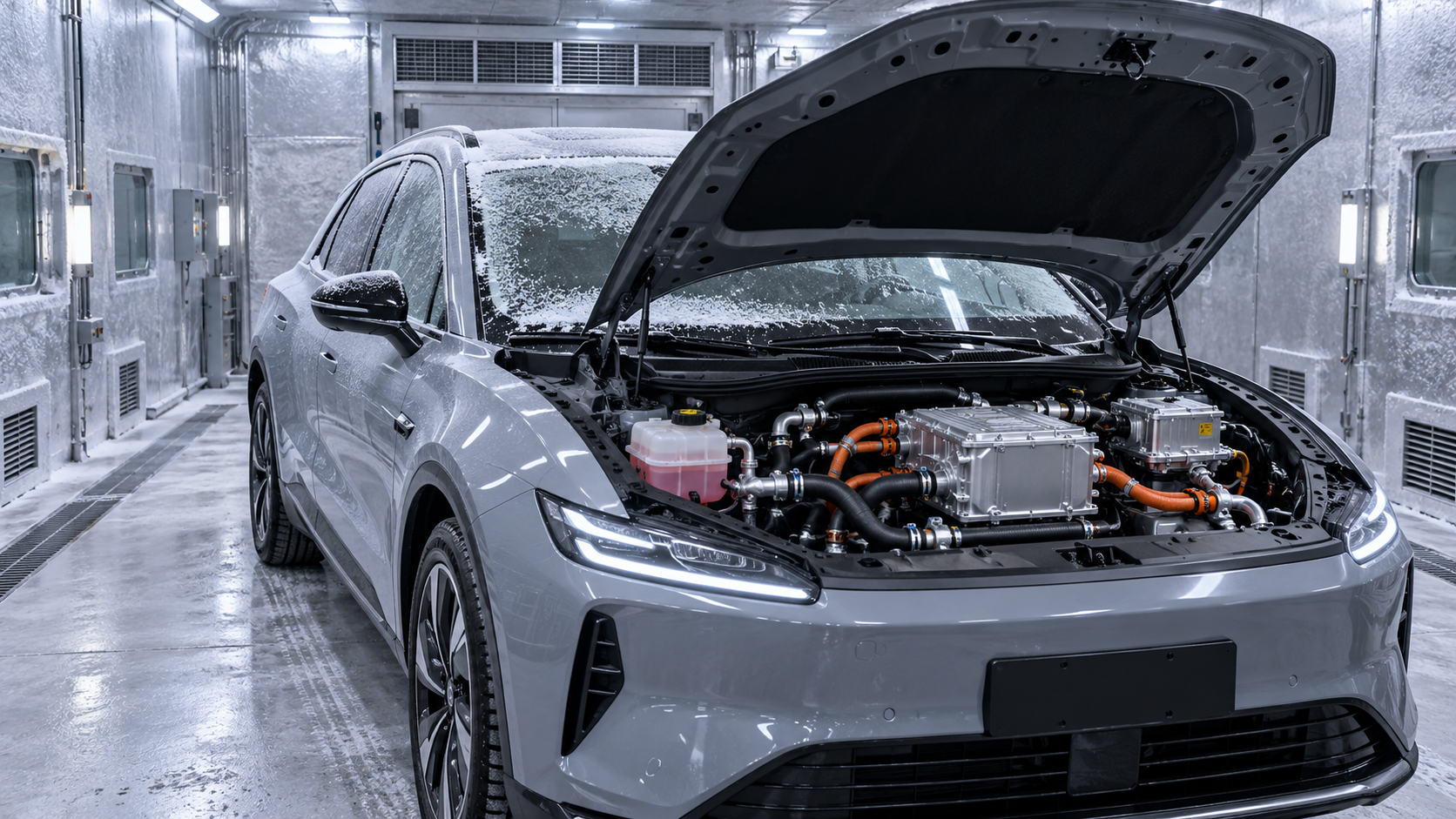
Automotive Heat Pump Systems need backup heating whenever usable heat output cannot meet cabin heating, windshield clearing, or battery-conditioning demand within the required time. A cold-soaked vehicle leaving a parking area can reach that condition before a vehicle already driving at the same outside temperature. The consequences include slow cabin warm-up, inadequate windshield clearing, or delayed battery readiness.
There is no universal ambient-temperature threshold for switching on supplemental heat. The decision depends on the heat pump’s operating envelope, available heat sources, humidity, vehicle heat loss, and competing thermal loads. For selection, the essential question is whether the complete system can meet each required operating condition—not whether the compressor can still run.
Identify the shortfall before selecting a heater
Backup heating serves several distinct purposes. It may cover a sustained capacity deficit, shorten warm-up time, maintain heat during outdoor heat-exchanger defrost, or provide limited operation after a fault. These requirements do not necessarily justify the same heater size or installation location.
A heat pump may eventually maintain the cabin target without assistance but fail the initial warm-up requirement. Conversely, it may warm the cabin adequately at first, then lose capacity as frost accumulates. Evaluating only stabilized heating performance misses both situations.
Low temperature matters, but architecture determines the limit
When outside air is the heat source, falling ambient temperature generally makes heat extraction more difficult while cabin heat loss increases. Compressor pressure ratio, discharge temperature, speed, current, and refrigerant-flow limits can restrict usable output. A compressor that remains operational may therefore be unable to deliver sufficient cabin heat.
Refrigerant choice and cycle design affect this boundary. Vapor injection, additional heat exchangers, and different refrigerant architectures can extend operating capability, but none establishes vehicle-level performance by itself. Selection requires maps for the proposed configuration, including coolant temperatures, airflow, and control limits—not a refrigerant label or a single rated capacity.
Recoverable motor, inverter, and battery heat can improve operation, provided those components are warm enough and the thermal circuit can transfer their heat. A cold-soaked vehicle starting a short urban trip may have little useful waste heat. Highway operation can offer more, although the amount depends on powertrain efficiency, load, and thermal priorities.
Do not credit waste heat unless it is available during the duty cycle being evaluated. Capacity demonstrated with preheated coolant should not be treated as cold-start capability.
Frost and windshield demand can trigger assistance before extreme cold
Outdoor heat-exchanger frost is not confined to the lowest ambient temperatures. Moist air contacting a sufficiently cold coil can deposit frost, restricting airflow and heat transfer. The relevant variables include humidity, coil surface temperature, airflow, and operating duration.
During refrigerant-cycle defrost, the system may temporarily reduce or interrupt cabin heating, depending on its architecture. A supplemental heater can bridge that interruption. Its required output depends on the remaining cabin heat supply, defrost duration, cabin thermal inertia, and acceptable outlet-air temperature drop.
Repeated cycles matter more than a single successful defrost event. An arrangement that maintains comfort during one interruption may still allow progressive cabin cooling or consume excessive energy over a longer journey.
Windshield defogging introduces a separate constraint: warm air alone does not guarantee moisture removal. The HVAC system must manage fresh-air intake, recirculation, airflow distribution, and dehumidification where available. Supplemental heat can support air reheating after dehumidification, but it cannot compensate for inadequate airflow or poor moisture control. Windshield visibility should therefore be assessed directly rather than inferred from cabin temperature.
Size backup heat at the delivery point
A useful starting relationship is:
Required backup thermal output = required delivered heat − usable heat-pump output − other usable heat contributions.
Apply this relationship at a consistent system boundary and over the relevant time interval. Compressor-side heating output is not necessarily the heat reaching cabin air or battery coolant. Distribution losses, circuit warm-up, valve routing, and heat-exchanger performance change the delivered result.
For warm-up, required heat includes raising the temperature of cabin trim, glazing, coolant, and other coupled thermal mass—not just heating the air. For sustained operation, infiltration, ventilation, vehicle speed, and body heat loss become important. A single steady-state load calculation cannot establish both requirements.
Cabin and battery demands should be combined only where they genuinely occur together. A shared coolant heater may serve both, but its output cannot be counted twice. Circuit temperatures and routing may also prevent all nominal heater output from reaching the higher-priority load.
Distinguish three sizing objectives:
- Peak assistance: cover short warm-up or visibility events while the heat pump supplies the remaining load.
- Sustained supplementation: cover a persistent deficit under the specified cold-weather duty cycle.
- Degraded operation: provide a defined minimum function when heat-pump operation is unavailable.
The third objective may require greater independent capacity, but full cabin comfort after every thermal-system fault is not automatically a design requirement. Define the intended degraded function first. Also identify common dependencies: a backup heater sharing the same electrical supply, coolant pump, or failed circuit may not provide the expected redundancy.
Choose the heater location around the unmet function
Air-side electric heating
An air-side positive temperature coefficient (PTC) heater can add heat directly to the HVAC airflow, supporting rapid outlet-air temperature rise and windshield clearing. It avoids waiting for an entire coolant circuit to warm, although cabin surfaces still need time to heat.
Assessment should include airflow distribution, pressure drop, local temperature limits, electrical protection, and output modulation. Actual heater output depends on voltage, airflow, inlet temperature, and control strategy; nominal electrical rating alone is insufficient.
Coolant-side electric heating
A coolant heater can support cabin heating through a heater core and may also serve battery conditioning when the circuit permits. It suits architectures that need heat delivered to several coolant-connected loads.
The trade-off is thermal-path dependence. Pump flow, coolant volume, valve position, trapped air, and heat-exchanger effectiveness determine response. A high-rated heater can still produce slow cabin warm-up if substantial energy first heats coolant or components outside the immediate priority path.
Neither arrangement is inherently the better backup. Select air-side heating when the dominant unmet function is rapid air delivery; evaluate coolant-side heating when battery support or integrated coolant heating is central. Some architectures justify both, but the additional hardware needs a demonstrated functional benefit.
Activation should follow thermal demand and electrical limits
An ambient-temperature switch can be a useful calibration input, but it is too coarse as the sole control rule. More effective logic considers requested heat, estimated available heat-pump capacity, cabin and coolant temperatures, windshield demand, compressor restrictions, and defrost state.
During cold start, the controller may blend supplemental heat with heat-pump output, then reduce assistance as capacity becomes available. Hysteresis, filtering, and controlled ramp rates help prevent rapid cycling or uncomfortable outlet-temperature changes. These measures must not delay visibility-related heating beyond its required response.
Electrical feasibility is equally important. Resistive heating converts electrical input into heat at approximately unity efficiency at the heater, while a heat pump can deliver more heat per unit of electricity when conditions permit. Routine electric assistance can therefore erode the system’s energy advantage.
Check the complete vehicle power budget during simultaneous traction demand, battery conditioning, and cabin heating. Available heater power may be constrained by battery temperature, state of charge, voltage, current limits, or power-distribution capability. A heater sized for the thermal deficit is not sufficient if the vehicle cannot power it during the condition that creates that deficit.
Validation evidence that supports a selection decision
Request time histories rather than only peak values or stabilized ratings. Useful channels include cabin temperature distribution, windshield clearing, outlet-air temperature, coolant temperatures and flow, compressor operating state, heater input, battery power, and defrost events.
- Establish the thermal initial state. Document soak conditions for the cabin, battery, powertrain, and coolant circuits. Avoid unintentionally crediting stored heat.
- Separate transient and sustained requirements. Measure initial response and continued operation, including repeated frost and defrost where relevant.
- Apply realistic concurrent loads. Include required battery conditioning, ventilation, passenger moisture load, and vehicle-speed effects.
- Test power-constrained conditions. Confirm performance when the battery or electrical architecture limits supplemental-heater output.
- Verify defined degraded modes. Check that specified faults leave the intended heating path, controls, and electrical supply available.
Acceptance criteria should specify the function, timing, environment, and permitted energy use. “Cabin reaches target temperature” leaves important gaps: where temperature is measured, how quickly visibility is restored, whether rear occupants receive heat, and whether battery preparation is delayed.
For component selection, require a capacity map, transient results, and electrical limits that describe the same configuration. A proposal may combine a compressor map from one coolant condition, a heater rating at another voltage, and vehicle results using a different calibration. Those figures cannot establish a reliable capacity balance without reconciliation.
Backup heating is justified when a defined operating requirement remains unmet after accounting for usable heat-pump output and genuinely available recovered heat. Specify its capacity, installation point, and control authority against that particular shortfall. If supplier evidence covers only warmed-up operation, cold-start and defrost performance remain unresolved selection risks—not proof that supplemental heating is unnecessary.
Core Sector // 01
Recommended News
 Vehicle Heat PumpsUsing powertrain waste heat in EV thermal management systemsEV Thermal Management Systems can recover powertrain waste heat to reduce heating energy use. Explore heat paths, controls, and real-world savings to make smarter design decisions.
 Vehicle Heat PumpsWhen do automotive heat pump systems need backup heating?When do Automotive Heat Pump Systems need backup heating? Explore cold starts, defrost demands, and heater sizing to select the right solution for reliable comfort and visibility.