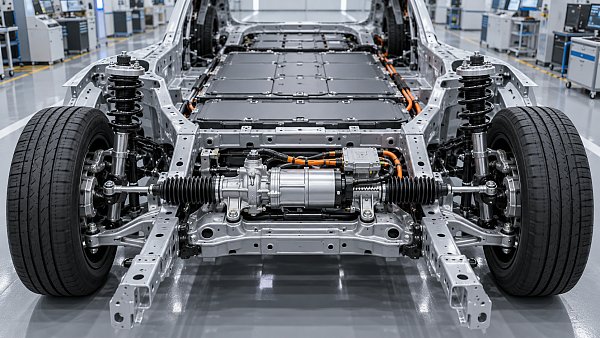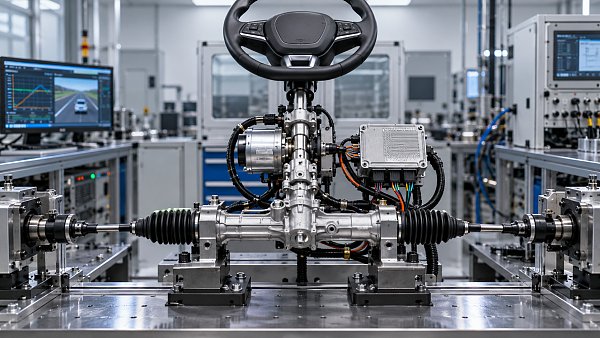
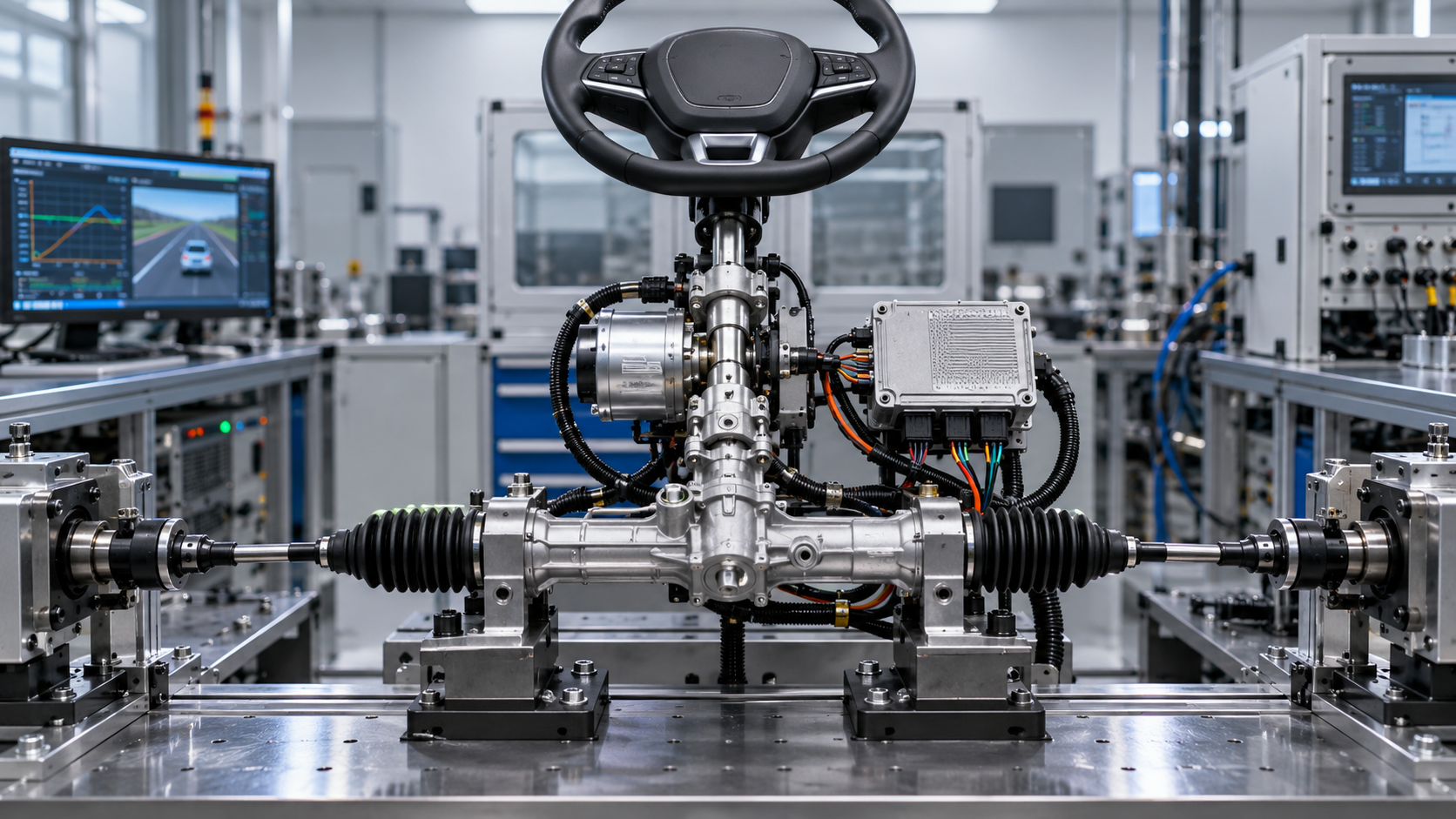
Steering feels lighter during parking because electric power steering systems provide more motor assistance. At highway speeds, they generally reduce assistance to increase driver effort.
The controller combines vehicle speed with measured steering torque and other operating signals. Calibrated software determines how much assistance the motor should deliver at each moment.
This balance matters when comparing steering designs, investigating inconsistent assistance, or choosing components for a vehicle platform. Motor capacity alone cannot predict steering quality or consistency.
The key question is how accurately the system delivers appropriate assistance across changing speeds, temperatures, road conditions, and electrical loads while maintaining predictable behavior for drivers.
How does vehicle speed change steering assistance?
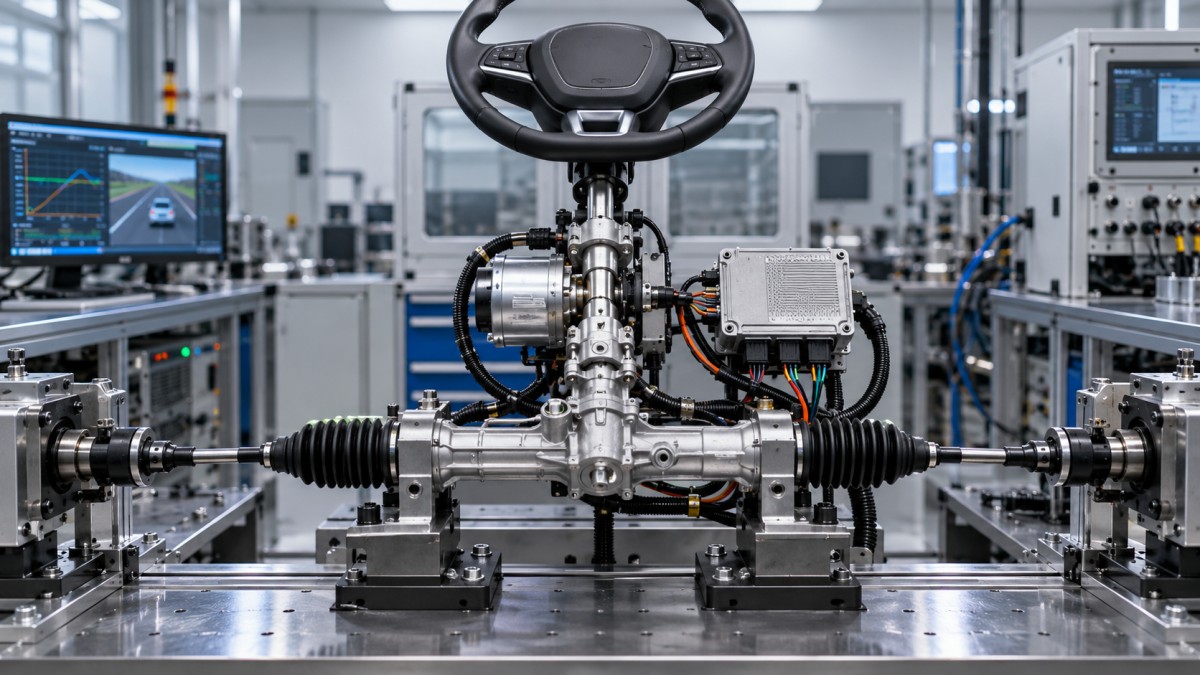
In a conventional mechanically linked EPS system, a torque sensor measures the driver's input. The controller uses that measurement to calculate the required motor assistance.
Vehicle speed modifies that calculation. During parking, a given driver torque typically requests greater motor assistance than the same torque would request at highway speed.
The controller commands an inverter to regulate motor current. Motor torque passes through a reduction mechanism that assists the steering column, pinion, or rack assembly.
With greater assistance, the driver supplies less of the effort needed to overcome tire friction and steering loads. Reduced assistance leaves more effort with the driver.
The relationship remains dynamic rather than switching between two fixed modes. Assistance usually changes progressively through intermediate speeds to avoid an obvious step in steering effort.
Reducing assistance does not normally change the mechanical steering ratio. Variable ratios, rear steering, and steer-by-wire introduce additional functions that require their own separate explanations.
Likewise, firmer steering does not automatically increase tire grip or guarantee stability. Its value depends on predictable effort, suitable feedback, and the vehicle's overall chassis behavior.
What does the assistance control map actually contain?
The basic assistance map usually relates driver steering torque to requested assistance at several vehicle speeds. Interpolation blends the mapped values between defined calibration points.
Near straight ahead, calibration may preserve a deliberate effort buildup. During larger parking inputs, the map can request substantially greater assistance within available operating limits.
A small input therefore need not receive the same assistance multiplier as a larger input. The relationship can be nonlinear to achieve specific steering characteristics.
Speed scheduling also need not decrease uniformly across the entire operating range. Engineers shape transitions around parking maneuvers, urban driving, lane changes, and highway travel.
Additional control functions can modify the base request. Depending on the design, these include damping, friction compensation, return assistance, and compensation for certain steering disturbances.
The final motor command also respects current, voltage, temperature, and hardware limits. A request from the assistance map cannot override the system's available operating capacity.
For this reason, a published peak motor torque figure reveals little about everyday steering feel. The assistance map and supporting controls determine how capability reaches drivers.
Which sensors and signals determine the motor command?
The steering torque sensor is central because it indicates driver effort and direction. Many designs infer torque from the relative twist across a torsion bar.
Vehicle speed commonly arrives through an in-vehicle network from another controller. Its source, update timing, plausibility checks, and fault handling depend on the vehicle architecture.
Steering position and rotational speed help supporting functions understand steering movement. These signals may support return behavior, damping, or coordination with other vehicle control systems.
Motor position sensing supports accurate motor control, while current feedback helps regulate torque production. Electrical and thermal measurements help the controller enforce component operating limits.
Some systems also use yaw rate, lateral acceleration, or other chassis information. Their involvement varies, so buyers should verify functions against the actual supplier specification.
Signal filtering prevents noise from creating unwanted torque fluctuations. Excessive filtering, however, can delay response, making steering feel disconnected or slow during rapid driver corrections.
Reliable assistance therefore depends on signal quality as well as sensor availability. Incorrect scaling, delayed messages, or intermittent connections can undermine an otherwise capable steering assembly.
Why can two EPS designs feel different at the same speed?
Column-assist, pinion-assist, and rack-assist systems introduce motor torque at different points. Their mechanical arrangements influence packaging, friction, stiffness, noise transmission, and available assistance capacity for each application.
Architecture alone does not establish steering quality. A well-matched system must accommodate axle load, tire characteristics, suspension geometry, steering ratio, and the intended vehicle behavior.
Wider tires or greater front axle loads can increase low-speed steering demand. Changes in wheel offset and suspension geometry can also alter forces reaching the steering.
Mechanical friction affects how much compensation is needed before the driver perceives a response. Compliance and backlash can further change precision around the straight-ahead position.
Electrical architecture matters because the motor needs adequate power during demanding maneuvers. Supply voltage, wiring resistance, connectors, and current limits influence the assistance actually available.
A system suited to a compact passenger car may therefore be unsuitable for a heavier platform, even when both advertise speed-sensitive assistance and similar software features.
Comparisons should connect specifications to vehicle requirements. Useful evidence includes rack-force capability, operating voltage range, thermal performance, packaging constraints, and measured behavior under representative steering loads.
Does heavier highway steering always mean better feedback?
Higher steering effort can make small unintended inputs less likely, but effort and feedback are different qualities. A heavy steering wheel can still communicate little.
Useful feedback involves how effort changes with tire loading and vehicle response. Excessive friction compensation, damping, or signal filtering can obscure information the driver expects.
Engineers therefore tune more than the overall assistance level. They evaluate effort buildup, response timing, center precision, return behavior, and consistency during repeated directional changes.
Damping illustrates the trade-off. Appropriate damping can reduce unwanted steering motion, while excessive damping can make quick corrections feel resistant or slow the wheel's return.
Return assistance also requires balance. The system may support movement toward center, but its action must work with mechanical self-aligning forces and the driver's input.
Drive modes may alter these characteristics through different calibrations. A sport setting can increase effort without changing mechanical ratio or improving the vehicle's available grip.
When assessing a vehicle, look for proportional response and predictable transitions. Steering that becomes abruptly heavy as speed rises deserves closer investigation, even if assistance remains available.
What can cause assistance to feel inconsistent?
First distinguish normal speed-dependent behavior from a fault. Gradual effort increases with road speed are expected; abrupt changes under similar conditions usually warrant further checks.
Repeated parking maneuvers can raise motor and electronics temperatures. Some systems then limit assistance to protect hardware, making steering heavier until operating conditions recover sufficiently.
Low supply voltage or excessive resistance in power connections can also restrict assistance. Symptoms may appear during high electrical demand or when steering loads peak.
Incorrect vehicle-speed information can lead to inappropriate assistance scheduling. Depending on the design, detected communication faults may instead trigger a predefined fallback strategy or warning.
Mechanical problems can produce similar complaints. Tire pressure, alignment, binding joints, strut bearings, and rack friction should be evaluated alongside electronic faults before replacing components.
A useful diagnostic record captures road speed, steering direction, temperature, electrical load, warning messages, and repeatability. Fault codes and live data then help narrow possible causes.
Sudden assistance loss or a steering warning requires action consistent with the vehicle manufacturer's guidance. Conventional mechanical linkage may remain, but the required effort can rise substantially.
What should engineers and buyers request from suppliers?
Start with the vehicle's steering load requirements across parking, maneuvering, and dynamic driving. Specify tire configurations, axle loads, supply conditions, and environmental limits before comparing proposals.
Request assistance capability at the rack or other relevant output interface. Confirm whether quoted values represent short-duration peaks, sustained capability, or performance under specific test conditions.
Ask how output changes with temperature and supply voltage. A strong peak specification may conceal limitations during repeated parking or operation near the minimum supported voltage.
Clarify who owns calibration and vehicle integration. Assistance maps, steering feel targets, network interfaces, and interactions with chassis controllers require clear responsibility throughout the development program.
Where driver assistance functions use steering actuation, establish torque coordination requirements. Lane-centering requests and driver override behavior must operate predictably alongside the underlying assistance controls.
Review diagnostic coverage, degraded operating modes, software configuration controls, and applicable functional safety evidence. The precise requirements should follow the vehicle program's architecture and risk analysis.
For sourcing decisions, also examine manufacturing traceability, end-of-line testing, replacement compatibility, and software support. These factors affect field consistency and service costs beyond initial component pricing.
How should speed-dependent assistance be validated?
Validation should demonstrate smooth, repeatable behavior across the operating range. Checking one parking maneuver and one highway condition leaves important transitions and limiting cases unexplored.
Engineers typically combine bench testing, simulation, and vehicle evaluation. Each method answers different questions about torque delivery, control behavior, thermal limits, and perceived steering quality.
Instrumented vehicle tests can track steering-wheel torque, angle, vehicle speed, motor current, and temperature. These measurements help distinguish subjective impressions from repeatable changes in system behavior.
Parking evaluations should include repeated maneuvers and demanding supply conditions. Road evaluations should examine effort progression, center response, return characteristics, and corrections at different speeds.
Testing across vehicle variants matters because tires, axle loads, and suspension options affect steering demand. Shared hardware does not automatically justify identical calibration across platforms.
Fault testing should verify the specified response to missing or implausible signals. Warning behavior, assistance transitions, and recovery must match the program's documented safety requirements.
Useful acceptance criteria define measurable targets and allowable variation. Consistent torque buildup and controlled transitions provide stronger evidence than a general claim that steering feels natural.
What matters most when judging speed-sensitive EPS?
Electric Power Steering Systems adjust assistance by combining driver torque with vehicle speed, then regulating motor output through calibrated controls and hardware protection limits continuously.
The practical result should be manageable parking effort and predictable steering as speed increases. Good performance also requires smooth transitions, suitable feedback, and thermal consistency.
For researchers, engineers, and buyers, the strongest comparison connects steering behavior to vehicle requirements and verified test results. Neither maximum assistance nor heavier highway effort proves quality.
Judge the complete system: sensing, calibration, mechanics, electrical supply, diagnostics, and validation. Their coordination determines whether speed-dependent assistance remains useful and consistent throughout everyday driving.