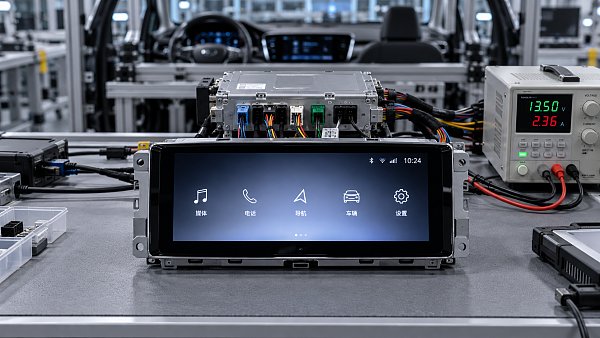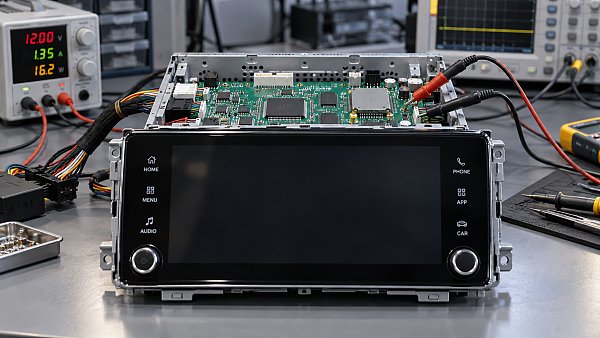
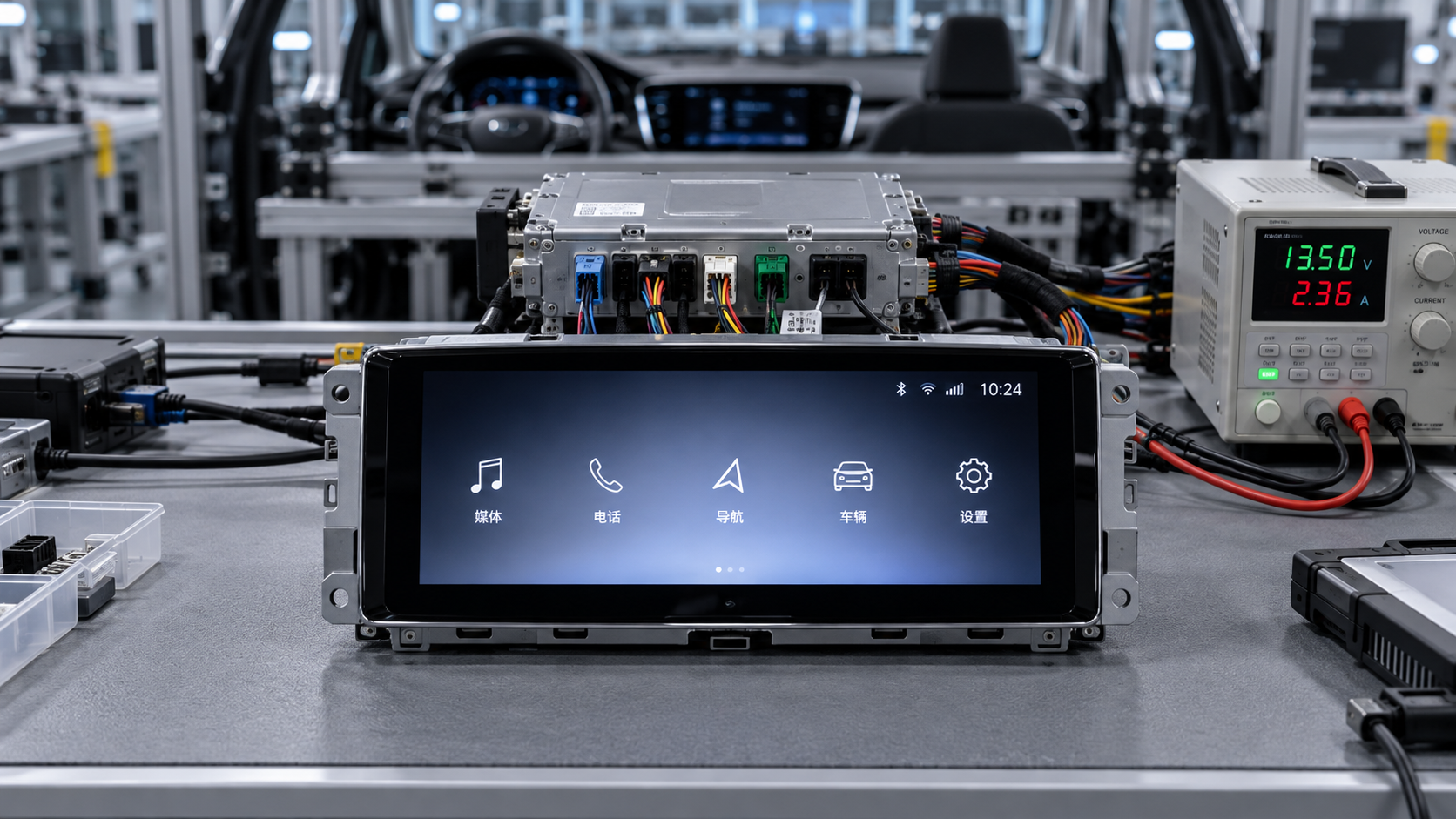
A failed OTA update can leave a vehicle’s display unresponsive, disrupt audio and navigation, or trigger repeated restarts. Recovery depends on where installation failed.
In-Vehicle Infotainment Systems can often recover automatically when a trusted boot path, compatible fallback software, and usable persistent data survive the failed update.
However, A/B partitions alone do not guarantee recovery. Power management, boot validation, security policies, and dependencies across vehicle controllers determine whether fallback actually works.
For technical evaluators, the central question is whether the system can restore defined essential functions within a measured time, without creating another failure elsewhere.
Which OTA failures can the system recover from automatically?
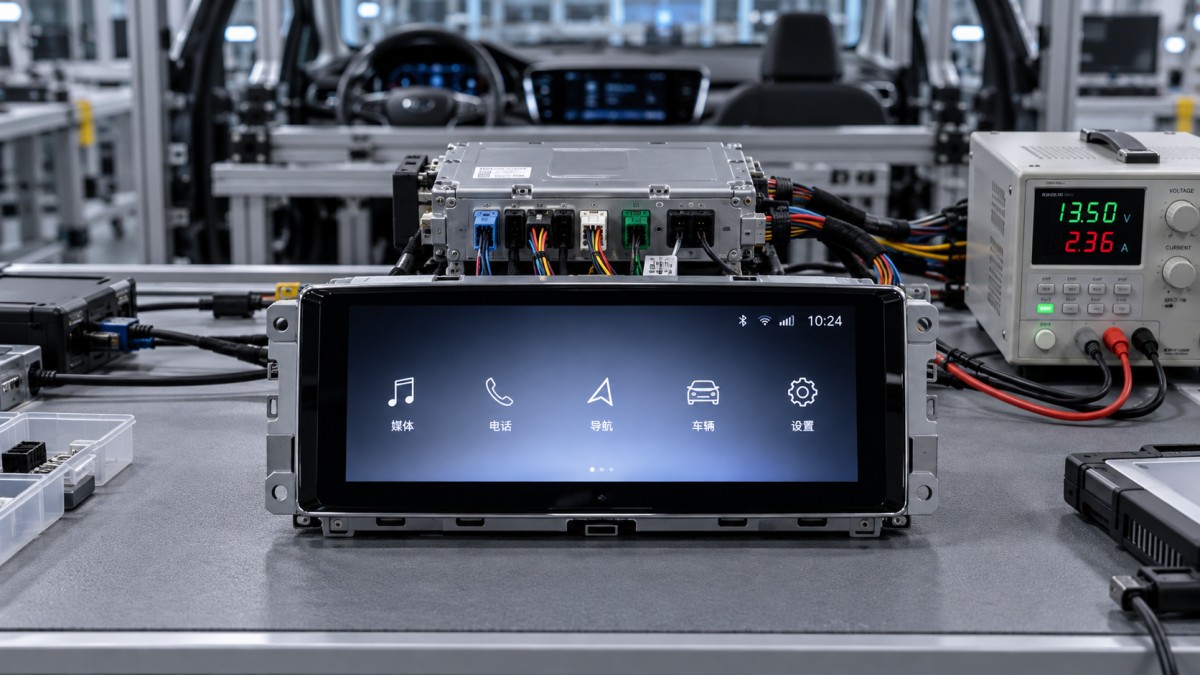
Recovery should begin by identifying the failed stage: downloading, verifying, writing software, switching boot targets, starting services, or confirming operation. Each requires different handling.
An interrupted download usually leaves the installed version operational. A suitable client can resume or restart the transfer, then verify the completed package before installation.
A rejected signature or incompatible package should stop installation before activation. Retrying cannot resolve incorrect signing credentials, incompatible hardware targeting, or unmet version requirements.
Interrupted installation is more demanding. Recovery depends on whether writes affected an inactive software slot, shared storage, boot metadata, or firmware outside the protected update mechanism.
A successful installation can still fail during startup. The kernel may boot while the display compositor, audio service, navigation database, or vehicle communications remain unavailable.
Automated recovery becomes harder when both bootable copies are unusable, shared data is corrupted, or a security rule prevents the previous version from starting.
Evaluators should therefore classify failures by affected storage and dependencies. A generic claim that the product “supports rollback” provides insufficient evidence of recoverability under actual faults.
How do A/B partitions restore a working software version?
In a typical A/B architecture, the running system occupies one slot while the updater writes the replacement into another. The active software remains available during installation.
After verification, boot control selects the updated slot for a trial boot. A limited attempt counter helps prevent endless restarts into an unusable image.
If startup fails before the system confirms success, the bootloader can select the previously successful slot. This depends on correctly maintained, power-resilient boot metadata.
The success signal deserves close scrutiny. Reaching the operating system login stage is weaker evidence than demonstrating a functioning display, audio path, and required vehicle interfaces.
Health checks must also avoid false failures. Navigation initialization or storage checks may take longer after an update, particularly under low-temperature or degraded-storage conditions.
A/B coverage varies between platforms. Bootloader stages, peripheral firmware, calibration files, and shared data may use separate mechanisms, so their failure behavior requires independent review.
Android also supports Virtual A/B implementations using snapshots. These change storage requirements and merge behavior; evaluators should examine interruption handling during snapshot creation and merging.
The Android A/B documentation and Virtual A/B documentation explain platform mechanisms. Supplier evidence must still establish how those mechanisms operate in the vehicle implementation.
What happens if power disappears during installation?
Power loss is manageable only when the update design anticipates interrupted writes. The decisive issue is what remains consistent after the controller powers up again.
Writing an inactive slot reduces exposure, but it does not automatically protect partition tables, boot selection records, shared filesystems, or independently updated peripheral controllers.
Critical metadata needs a recoverable update scheme, such as redundant records with integrity checks. The exact implementation should withstand interruption between individual storage operations.
Vehicle power policy also matters. Installation may require adequate battery charge, a parked state, suitable temperature, and an agreed period of controller power availability.
Those prerequisites reduce interruption probability; they cannot replace recovery design. Unexpected battery disconnection, supply faults, or controller resets must remain part of the validation scope.
After power returns, the system should identify incomplete work and follow a defined path: resume safely, discard incomplete content, or boot a known-good version.
Request fault-injection results across installation stages, including activation metadata writes. A demonstration that disconnects power only during package download proves little about installation resilience.
Why can rollback fail even when the old software survives?
The previous executable image may remain intact while its operating environment changes. Shared user data, database schemas, and configuration files are common sources of incompatibility.
For example, a new navigation service might migrate a shared database. The previous service could then reject that database after software rollback, leaving navigation unavailable.
Recovery strategies include backward-compatible schemas, reversible migrations, versioned data stores, and carefully scoped backups. Each needs explicit limits for storage consumption and migration interruption.
A factory reset may restore basic operation but erase profiles, pairings, and preferences. Suppliers should distinguish software recovery from recovery that preserves customer data.
Cross-controller dependencies create another boundary. An infotainment release may depend on gateway services, amplifier firmware, a display controller, or a particular vehicle communication interface.
If only part of that group updates, the fallback version must tolerate the resulting combination. Otherwise, independently successful updates can produce an unusable overall system.
Evaluators should request a compatibility matrix covering supported combinations, installation ordering, interrupted campaigns, and rollback direction. Any forbidden intermediate state needs an enforceable prevention mechanism.
Where complete rollback is impractical, a validated forward repair may be necessary. That requires a functioning recovery environment and a repair package compatible with the remaining components.
How do verified boot and security rules affect recovery?
Verified boot checks the authenticity and integrity of protected boot components according to platform policy. It can block corrupted software before that software begins normal operation.
However, authenticity does not establish functional correctness. A correctly signed release can still contain a graphics regression, resource leak, or incompatible configuration that prevents usable operation.
Recovery therefore needs both cryptographic verification and operational health assessment. Neither mechanism alone establishes that the driver can use the expected infotainment functions after installation.
Security rollback protection introduces a separate constraint: a previously working image may become ineligible once the platform advances its accepted minimum security version or equivalent policy.
The update design must coordinate that transition with fallback availability. Otherwise, a failure can leave an intact older slot that the platform refuses to boot.
A recovery image also needs authentication, maintained trust material, and controlled access. Its independence should be assessed against failures in normal software and update credentials.
The Uptane framework addresses automotive update security threats and metadata verification. It complements recovery architecture, but does not by itself prove bootability or functional restoration.
When does a failed update require workshop intervention?
When normal boot and fallback both fail, a separate recovery environment may reinstall authenticated software. Its usefulness depends on which damaged components it can actually repair.
Some implementations can retrieve a repair package over a network. Others require an approved local medium, diagnostic interface, or service tool with appropriate authorization.
Remote repair requires a working communication path. If connectivity depends on the failed infotainment software, the vehicle may be unable to receive its own repair package.
A separate connectivity controller can improve availability, provided power control, routing, authentication, and communication with the recovery environment remain operational during the relevant failure conditions.
Workshop intervention becomes necessary when recovery cannot access storage, restore required firmware, satisfy authorization requirements, or establish a trusted boot path through available service procedures.
Hardware replacement should follow diagnosis rather than assumption. Worn flash, storage-controller faults, and unstable power can resemble software corruption and cause repeated failures after reflashing.
Service documentation should identify repair prerequisites, expected duration, data loss, diagnostic codes, and escalation criteria. These details directly affect warranty exposure and vehicle downtime estimates.
What evidence should technical evaluators request?
Begin with an architecture diagram identifying boot stages, software slots, shared storage, recovery storage, connectivity dependencies, and every controller included in the update campaign scope.
Then request a failure matrix connecting each interruption point to its detection method, recovery action, customer-visible behavior, and service escalation condition. Avoid undocumented assumptions.
Measure time to essential functionality separately from time to complete installation. A fast boot is insufficient if audio or vehicle settings remain unavailable afterward.
Require results for representative hardware variants, realistic storage occupancy, and relevant environmental conditions. Flash wear and limited free space can expose failures absent on development units.
Recovery logs should record package identity, failure stage, slot state, relevant versions, and outcome. Logs must remain accessible when normal startup fails, subject to access controls.
Evaluate bounded retry behavior as well. Repeated attempts can drain the battery, consume flash endurance, and obscure the original fault without improving the recovery probability.
Acceptance criteria should specify recovery time, retained functions, allowable data loss, and maximum unattended retries. Thresholds should reflect the vehicle program’s actual operating requirements and risks.
How should recovery architecture influence component selection?
For In-Vehicle Infotainment Systems, recoverability is a property of the integrated platform. Processor capability alone cannot compensate for unsuitable storage, fragile power control, or incomplete software coordination.
Compare suppliers using demonstrated failure outcomes and the conditions tested. Include storage capacity, endurance, recovery maintenance, diagnostic access, and service effort in the sourcing assessment.
The strongest proposal explains which failures recover automatically, which functions return first, what data survives, and exactly when external assistance becomes necessary. These boundaries should be contractual.
A credible OTA recovery design restores trusted, compatible operation through a tested sequence. Technical approval should depend on that evidence, supported by realistic vehicle-level fault injection.